Digital marketing has become an important tool for small and medium-sized enterprises (SMEs) looking to grow their businesses in Nigeria. As more co
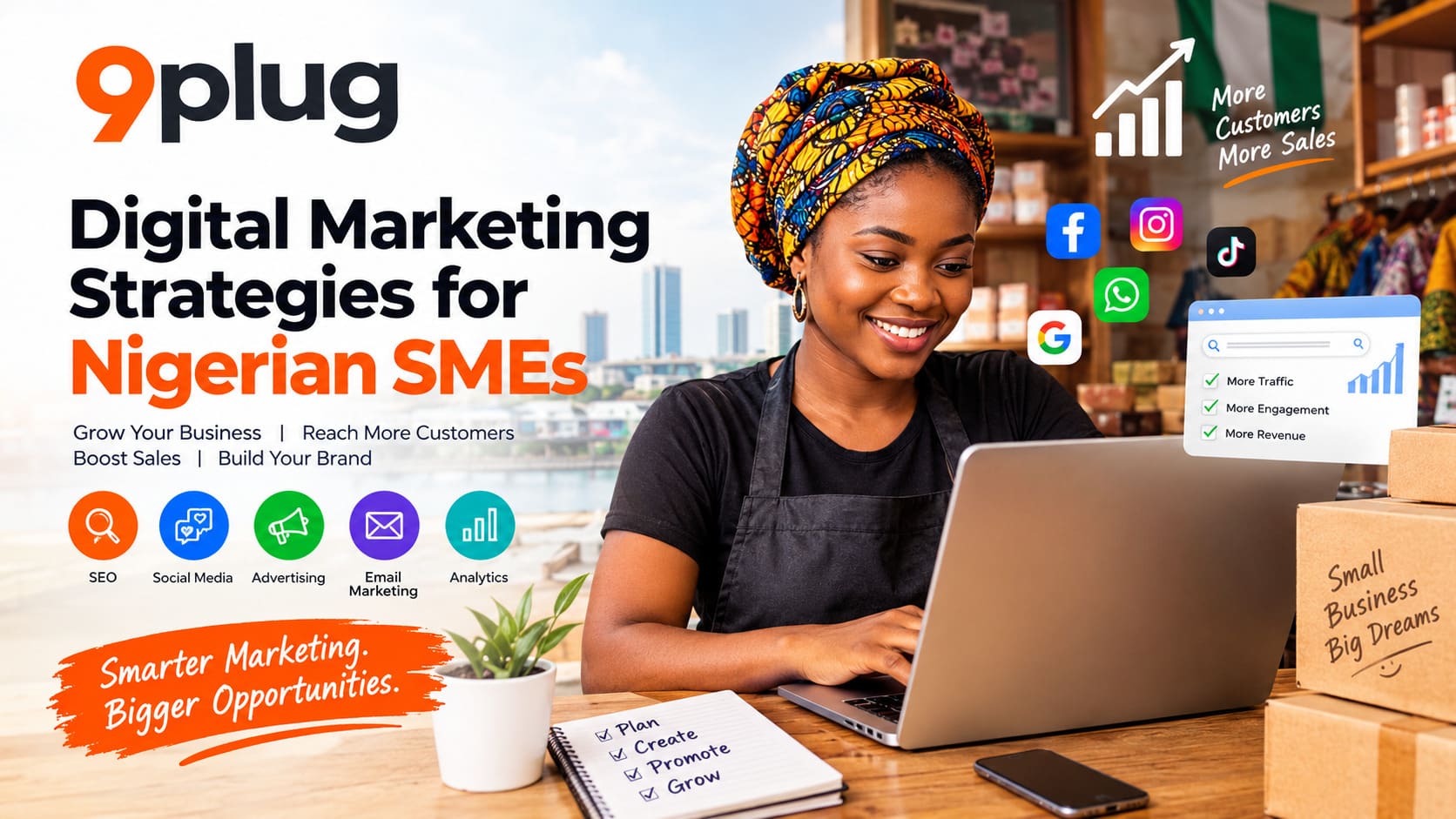
Digital marketing has become an important tool for small and medium-sized enterprises (SMEs) looking to grow their businesses in Nigeria. As more consumers use smartphones, social media, search engines, and online marketplaces to discover products and services, businesses need effective digital strategies to remain competitive.
From fashion stores and restaurants to technology companies, service providers, and online retailers, Nigerian SMEs can use digital marketing to reach potential customers, build trust, and increase sales without depending entirely on traditional advertising.
However, successful digital marketing requires more than simply creating a social media account or running occasional advertisements. Businesses need a clear strategy that connects them with the right audience, delivers useful content, and measures results.
In this article, 9plug.com explores practical digital marketing strategies for Nigerian SMEs, including search engine optimisation, social media marketing, content creation, email marketing, and paid advertising.
1. Build a Professional Website for Your Business
A professional website gives your business an online presence where customers can learn about your products, services, prices, and contact information.
Unlike social media profiles, your website gives you greater control over how your business information is presented. It can also help potential customers find your business through Google searches.
For Nigerian SMEs, a website should be easy to navigate, mobile-friendly, fast-loading, and simple to use.
Here are some essential website features to include:
- A clear description of your products or services.
- An easy-to-find phone number, email address, or WhatsApp contact link.
- High-quality product images and accurate descriptions.
- Customer reviews and testimonials that are genuine and permission-based.
- Clear pricing, delivery information, and return policies where applicable.
- Secure payment options if you accept online payments.
- A blog or resource section for publishing helpful information.
For example, a Lagos-based fashion business can use its website to display available clothing, provide size information, explain delivery options, and accept orders from customers in different parts of Nigeria.
A professional website can become the foundation of your digital marketing strategy by bringing together your search traffic, social media campaigns, and customer enquiries.
2. Use Search Engine Optimisation (SEO)
Search engine optimisation, commonly known as SEO, helps your website appear in relevant search results when people look for products, services, or information related to your business.
For instance, a customer searching for “affordable web design company in Abuja” may discover businesses that have relevant pages and useful information targeting that search intent.
SEO can help Nigerian SMEs attract potential customers who are already looking for what they offer.
Practical SEO strategies for Nigerian SMEs
Conduct keyword research: Identify the phrases your target customers use when searching online. These might include “best catering services in Lagos,” “phone accessories in Nigeria,” or “affordable digital marketing agency.”
Optimise your website pages: Use relevant keywords naturally in page titles, headings, product descriptions, and website content. Avoid repeating keywords excessively.
Create useful content: Publish articles that answer customers’ questions. A skincare business, for example, could create a guide explaining how to choose products for different skin types.
Improve website speed: Compress images, reduce unnecessary scripts, and choose reliable hosting to improve the user experience.
Set up Google Business Profile: Eligible businesses that serve customers in person or travel to customers can use a Google Business Profile to manage their business information and improve visibility in local search and Google Maps.
Build relevant links: Earn links from reputable websites, industry directories, business associations, and relevant publications through useful content and genuine relationships.
SEO generally takes time to produce results, but consistent improvements can help businesses build a sustainable source of organic traffic.
3. Leverage Social Media Marketing
Social media platforms such as Facebook, Instagram, TikTok, LinkedIn, and WhatsApp provide opportunities for Nigerian SMEs to connect with customers, showcase products, and build brand awareness.
The most effective platform depends on your audience and business goals. A fashion retailer may benefit from Instagram and TikTok, while a business consultancy may find LinkedIn more useful for reaching professional clients.
Instead of trying to maintain every platform, focus on the channels your target customers use most.
How to use social media effectively
- Publish useful and engaging content consistently.
- Share product demonstrations, tutorials, and behind-the-scenes videos.
- Respond promptly to comments and customer enquiries.
- Use relevant hashtags where they help discovery.
- Share genuine customer feedback with permission.
- Use platform analytics to understand which posts generate enquiries and sales.
- Make it easy for customers to move from discovering your business to placing an order.
For example, a Nigerian food business could publish short cooking videos, showcase its menu, share customer feedback, and post clear instructions for placing orders.
Consistency and relevance matter more than posting excessively. Focus on content that helps customers understand your products and gives them a reason to trust your business.
4. Use WhatsApp Business to Communicate with Customers
WhatsApp is widely used in Nigeria, making it a practical communication and sales channel for many small businesses.
WhatsApp Business offers features that can help SMEs organise customer interactions and make it easier for buyers to learn about available products and services.
Useful features include:
- Business profile: Display your business description, address where relevant, operating hours, and contact information.
- Product catalogue: Showcase products with photographs, descriptions, and prices.
- Quick replies: Save answers to common customer questions.
- Labels: Organise conversations by categories such as new enquiries, pending payments, and completed orders.
- Greeting and away messages: Help customers understand when they can expect a response.
Businesses can also use WhatsApp to send relevant updates to customers who have agreed to receive them.
Avoid sending unsolicited promotional messages in bulk. Respect customer preferences, protect personal information, and keep conversations professional.
5. Invest in Content Marketing
Content marketing involves creating and sharing helpful information to attract and retain a clearly defined audience.
Rather than promoting your products in every message, content marketing focuses on answering questions, solving problems, and demonstrating your expertise.
For Nigerian SMEs, content can take several forms, including blog posts, videos, infographics, podcasts, tutorials, and downloadable guides.
For example:
- A gadget store could publish articles about choosing smartphones and protecting electronic devices.
- A travel agency could share travel preparation checklists and destination guides.
- An accounting firm could explain basic bookkeeping practices for small businesses.
- A fashion retailer could publish styling tips and clothing care guides.
Useful content can attract search traffic, provide material for social media, and help customers make informed purchasing decisions.
Create a simple content plan
Start by identifying five to ten common questions your customers ask. Turn each question into a useful article, video, or social media post.
Then organise your content around themes relevant to your products or services. Include appropriate calls to action that guide readers towards contacting your business, exploring your catalogue, or requesting a quotation.
The goal is to provide genuine value while helping potential customers understand how your business can meet their needs.
6. Run Targeted Digital Advertising Campaigns
Paid advertising can help Nigerian SMEs reach specific audiences more quickly than relying exclusively on organic marketing.
Platforms such as Google Ads, Facebook Ads, Instagram Ads, and TikTok Ads offer different targeting and campaign options.
Google Ads may be useful for reaching people actively searching for particular products or services. Social media advertising can help introduce a brand to potential customers based on available audience-targeting options.
Tips for successful digital advertising
Define your objective: Decide whether you want website visits, customer enquiries, product sales, or brand awareness.
Target relevant audiences: Use appropriate location, interest, demographic, or search targeting options available on your chosen platform.
Create clear advertisements: Explain what you offer, why it is useful, and what customers should do next.
Use strong landing pages: Send visitors to a relevant page rather than a generic homepage whenever possible.
Set a manageable budget: Begin with a budget your business can afford and evaluate results before increasing spending.
Track performance: Measure enquiries, purchases, conversion rates, and cost per acquisition where tracking is available.
Avoid judging an advertising campaign solely by likes or impressions. A campaign that generates fewer interactions but more profitable sales may provide greater value.
7. Embrace Email Marketing
Email marketing helps businesses communicate with customers, share useful information, announce new products, and encourage repeat purchases.
Although social media is valuable, an email list gives your business a direct communication channel that is less dependent on changing social platform algorithms.
Nigerian SMEs can use email marketing to send:
- Welcome messages to new subscribers.
- Product updates and new arrivals.
- Educational newsletters.
- Special offers and promotions.
- Order updates and customer service information.
- Relevant reminders for customers who have agreed to receive them.
To build an email list, offer something useful, such as a practical guide, product updates, or exclusive information. Ask people to subscribe voluntarily and provide a clear way to unsubscribe.
Personalise emails where appropriate and avoid sending messages too frequently. Every email should have a clear purpose and offer value to the recipient.
8. Work with Influencers and Content Creators
Influencer marketing can help SMEs introduce their products to established online communities.
Nigeria has a large and diverse creator economy, including fashion influencers, technology reviewers, food creators, comedians, lifestyle personalities, and industry specialists.
You do not necessarily need to work with celebrities. Micro-influencers and smaller creators may have highly engaged audiences that align closely with your target market.
How to choose the right influencer
- Check whether their audience matches your intended customers.
- Review the quality and relevance of their content.
- Look for genuine engagement rather than focusing only on follower numbers.
- Ask for campaign performance information where appropriate.
- Agree on deliverables, payment, timelines, and usage rights in writing.
- Require clear disclosure of paid partnerships.
- Track results using unique links, discount codes, or campaign-specific enquiry channels.
For example, a small beauty business could collaborate with a beauty creator who demonstrates how its products work and explains the experience honestly.
Influencer marketing works best when the partnership feels credible and the product genuinely suits the creator’s audience.
9. Focus on Local SEO and Location-Based Marketing
Local SEO is especially valuable for businesses serving customers in particular cities, neighbourhoods, or regions.
Restaurants, salons, repair services, clinics, retail shops, and other local businesses can benefit when potential customers find accurate business information in search results and on Google Maps.
To improve local visibility:
- Create or update your Google Business Profile if eligible.
- Use consistent business names, addresses, and phone numbers across relevant listings.
- Select accurate business categories.
- Add clear photographs of your premises, products, or work.
- Keep opening hours and contact information updated.
- Encourage genuine customer reviews without offering inappropriate incentives.
- Respond professionally to reviews and questions.
- Create useful location-specific pages when they serve a real customer need.
For example, a cleaning company serving Abuja could create a detailed page explaining its services, coverage areas, booking process, and common customer questions.
Avoid creating multiple near-identical pages for different locations if they provide little unique value. Local content should help customers make decisions rather than exist solely to target keywords.
10. Use Video Marketing to Capture Attention
Video marketing has become an important way for businesses to demonstrate products, explain services, and build relationships with potential customers.
Short videos are particularly useful for showing how products work, answering frequently asked questions, and presenting information in an engaging format.
Nigerian SMEs can publish videos on TikTok, Instagram Reels, Facebook, YouTube, and their own websites.
Video ideas include:
- Product demonstrations.
- Before-and-after presentations where accurate and appropriate.
- Customer testimonials shared with permission.
- Frequently asked questions.
- Behind-the-scenes business activities.
- Tutorials and educational tips.
- Product comparisons and buying guides.
You do not need expensive equipment to begin. A smartphone, clear lighting, understandable audio, and a useful message can be enough for many short videos.
Include captions where possible, especially because some people watch videos without sound. Make the opening seconds relevant, and finish with a clear next step for interested viewers.
11. Use Data Analytics to Measure Marketing Performance
Digital marketing allows businesses to measure many aspects of their campaigns and use the results to make better decisions.
Tools such as Google Analytics and Google Search Console can help website owners understand how people discover and interact with their content.
Social media platforms also provide analytics that can show which posts reach audiences and generate engagement.
Important metrics include:
| Metric | What it helps you understand |
|---|---|
| Website traffic | How many people visit your website |
| Search impressions | How often your pages appear in Google Search |
| Click-through rate | How frequently people click after seeing a search result |
| Conversion rate | The percentage of relevant visitors who complete a desired action |
| Cost per lead | How much you spend to generate a qualified enquiry |
| Customer acquisition cost | The estimated cost of gaining a customer |
| Return on ad spend | Revenue attributed to advertising relative to advertising cost |
| Customer retention | How well your business keeps existing customers |
Choose metrics that align with your business objectives. A service company may prioritise qualified enquiries and booked appointments, while an online retailer may focus on purchases and profit margins.
Review performance regularly and use the findings to improve your campaigns. Remember that revenue alone does not equal profit, and attribution data may not capture every customer interaction.
12. Optimise Your Digital Marketing for Mobile Users
Many Nigerian consumers access online content and communicate with businesses through mobile devices. A poor mobile experience can discourage potential customers from completing a purchase or enquiry.
Make sure your website loads efficiently on mobile connections, text is easy to read, buttons are easy to tap, and contact information is accessible.
Other useful improvements include:
- Compressing large images.
- Simplifying forms.
- Making telephone numbers clickable.
- Providing clear delivery and payment information.
- Testing checkout pages on different devices.
- Reducing unnecessary pop-ups.
- Making key product information visible without excessive scrolling.
A smooth mobile experience helps customers find information and take action with fewer obstacles.
13. Build Customer Loyalty Through Remarketing
Acquiring a new customer can require time and marketing expenditure. Building relationships with existing customers can help businesses encourage repeat purchases and referrals.
Remarketing involves reaching people who have previously interacted with your business, where appropriate consent, platform policies, and applicable privacy requirements are satisfied.
For example, a customer who visits an online store may later see a relevant advertisement for a product they viewed. A business might also send opted-in customers updates about new arrivals or useful services.
Other customer-retention strategies include loyalty programmes, personalised support, reliable delivery, post-purchase follow-ups, and helpful product recommendations.
Avoid intrusive tracking or excessive messages. Customers are more likely to maintain a relationship with a business that respects their preferences and provides a consistently good experience.
14. Common Digital Marketing Mistakes Nigerian SMEs Should Avoid
Even businesses with useful products can struggle online when their marketing lacks direction.
Some common mistakes include:
Marketing without a clear audience: Trying to appeal to everyone can make your message less relevant. Define the customers most likely to benefit from your offering.
Ignoring SEO: Depending entirely on paid advertisements or social media can leave your business vulnerable to changing costs and platform rules.
Posting without a strategy: Random posts may generate activity without contributing to meaningful business goals.
Buying fake followers: Artificial engagement rarely creates genuine customer relationships and can distort performance measurements.
Ignoring customer enquiries: Slow or unclear responses can cause interested buyers to choose another business.
Failing to track results: Without measurement, it is difficult to know which activities deserve more investment.
Making unrealistic promises: Exaggerated claims can damage trust and create customer dissatisfaction.
Neglecting website security: Protect business accounts, customer information, and payment processes with appropriate security measures.
Avoiding these mistakes can help SMEs use their marketing resources more effectively.
15. How to Create a Practical Digital Marketing Budget
A digital marketing budget should reflect your business goals, available resources, and ability to fulfil additional orders or enquiries.
There is no single budget that works for every Nigerian SME. A new business may begin with organic content and basic website improvements, while an established company may invest in advertising, professional content production, and specialist services.
A practical approach is to divide your available budget among a few priority activities.
For example:
- Website improvements and hosting.
- SEO and content production.
- Social media content and management.
- Paid advertising experiments.
- Email marketing or customer relationship tools.
- Analytics, testing, and optimisation.
Treat these as possible budget categories rather than fixed spending percentages. Review the costs and results of each activity before committing more money.
Start with a few measurable objectives, such as increasing qualified enquiries, improving product sales, or attracting more relevant search visitors. Expand spending when the evidence supports it.
Conclusion
Digital marketing strategies for Nigerian SMEs can help businesses increase visibility, connect with customers, generate enquiries, and grow sales in an increasingly digital economy.
By building a professional website, investing in SEO, using social media strategically, communicating through WhatsApp Business, creating useful content, and measuring performance, small businesses can develop a stronger online presence.
The most effective approach is not necessarily the one with the largest budget. It is the one that understands its customers, communicates a clear value proposition, and consistently improves based on real results.
For Nigerian SMEs, the best starting point is to choose two or three strategies that match their immediate goals, implement them properly, and expand as the business grows.
Implementing digital marketing strategies can feel overwhelming, especially for small businesses working with limited budgets and staff. A structured 90-day plan helps Nigerian SMEs prioritise important tasks, measure progress, and build a sustainable online presence.
This action plan divides digital marketing into three phases: building a strong foundation, attracting customers, and improving results.
Days 1–30: Build Your Digital Marketing Foundation
Goal: Establish your online presence and prepare your business to attract potential customers.
During the first month, focus on setting up essential digital channels and understanding your target audience.
Week 1: Define Your Audience and Goals
- Identify your ideal customers, including their needs, locations, and purchasing habits.
- Research competitors and examine how they promote their products or services.
- Set three measurable goals, such as increasing website enquiries, generating sales, or improving search visibility.
- Choose two or three marketing channels that best suit your audience.
Week 2: Improve Your Online Presence
- Create a professional website or improve your existing website.
- Ensure your website works well on smartphones and loads quickly.
- Set up or update your Google Business Profile if your business is eligible.
- Create or optimise relevant social media business profiles.
- Set up WhatsApp Business with a complete profile, product catalogue, and quick replies where appropriate.
Week 3: Start SEO and Content Planning
Research relevant keywords customers use when searching for your products or services.
- Optimise important website pages with descriptive titles, headings, and useful content.
- Plan four to eight useful social media posts.
Prepare at least one or two helpful website articles based on customer questions.
Set up Google Search Console and, where appropriate, Google Analytics.
Week 4: Establish a Baseline
Record your current website traffic, search impressions, enquiries, and sales.
Test your website’s contact forms, telephone links, and checkout process.
Ask genuine customers for honest feedback and reviews without pressuring them.
Review your first month’s work and identify any technical or content gaps.
Expected outcome: Your business should have a clearer target audience, an improved online presence, working contact channels, and baseline performance data.
Days 31–60: Attract Customers and Generate Leads
Goal: Increase relevant traffic, improve audience engagement, and encourage potential customers to contact your business.
Week 5: Publish Valuable Content
Publish one or two useful SEO-focused articles, depending on your resources.
- Share educational posts, product demonstrations, or service explanations.
Repurpose website content into shorter social media posts and videos.
Add relevant internal links between related pages on your website.
Week 6: Strengthen Social Media and WhatsApp Marketing
Follow a realistic posting schedule on your priority platforms.
- Respond promptly to customer enquiries and comments.
Use WhatsApp Business tools to organise conversations and answer frequently asked questions.
Share relevant product updates with customers who have agreed to receive them.
Week 7: Test a Small Advertising Campaign
Choose one business objective, such as generating qualified enquiries or online purchases.
Select a suitable platform, such as Google Ads or Meta Ads.
Set a spending limit your business can afford without affecting essential operating costs.
Test one or two advertisements with clear messages and calls to action.
Track enquiries, purchases, and costs rather than focusing only on impressions or likes.
Week 8: Build Trust and Partnerships
Request genuine customer testimonials with permission.
- Explore collaborations with relevant local creators or complementary businesses.
Improve product descriptions, delivery information, pricing transparency, and customer support.
Review which content and channels generate the most relevant enquiries.
Expected outcome: Your business should have a more consistent publishing routine, early performance insights, and a clearer understanding of which channels attract potential customers.
Days 61–90: Measure, Optimise, and Scale
Goal: Improve marketing performance and concentrate resources on activities that deliver measurable business value.
Week 9: Review SEO Performance
Use Google Search Console to identify queries generating impressions and clicks.
Review pages receiving traffic and identify opportunities to improve their titles, descriptions, and content.
Check indexing issues and website performance.
Update older articles when new information or stronger explanations are available.
Week 10: Improve Conversion Rates
Make calls to action clearer on important website pages.
Simplify enquiry forms and the purchase process.
Test website usability on mobile devices.
Address recurring customer questions and objections.
Check whether advertising landing pages match the promises made in the advertisements.
Week 11: Improve Customer Retention
Send useful email updates to subscribers who have opted in.
Follow up on completed purchases where appropriate.
Introduce a simple loyalty or referral programme if it suits your business.
Review customer feedback and resolve common service problems.
Week 12: Reallocate Your Marketing Budget
Compare channel performance against your original goals.
Identify campaigns generating qualified leads or profitable sales.
Reduce spending on activities that consistently underperform, after allowing sufficient time and checking tracking accuracy.
Invest more carefully in channels showing promising results.
Plan the next three months around the strongest opportunities.
Days 85–90: Complete Your 90-Day Review
Compare your current results with your baseline from the first month.
Record website traffic, search performance, leads, sales, and marketing expenditure.
Document the lessons learned from each channel.
Create a new 90-day plan with realistic targets and priorities.
Expected outcome: You should have a clearer picture of which digital marketing activities work for your business, where improvements are needed, and how to allocate your next marketing budget.
90-Day Digital Marketing Checklist
Use this checklist to track your progress.
- Define your target audience and marketing goals.
- Set up or improve your website and business profiles.
- Configure basic SEO and analytics tools.
Publish useful website and social media content consistently.
Optimise WhatsApp Business and customer communication.
Test a small, measurable advertising campaign if your budget allows.
Collect genuine customer feedback.
Review website traffic, enquiries, and sales monthly.
Improve pages and campaigns based on performance data.
Prepare a new marketing plan for the next 90 days.
How Should Nigerian SMEs Measure Success After 90 Days?
Success should be measured against your starting position and business objectives rather than a universal traffic or sales target.
| Performance indicator | What to measure |
|---|---|
| Website visibility | Search impressions and relevant keyword performance |
| Organic traffic | Visits from unpaid search results |
| Customer enquiries | Qualified calls, messages, and form submissions |
| Sales | Completed purchases or confirmed bookings |
| Advertising efficiency | Cost per lead and return on ad spend where measurable |
| Customer retention | Repeat purchases and returning customers |
| Content performance | Relevant visits, engagement, and conversions |
Not every business will see substantial SEO growth within 90 days. Search visibility, competition, website history, budget, and content quality all influence results. The purpose of this plan is to build a solid foundation, gather reliable data, and make better marketing decisions over time.
Pro tip from 9plug.com: Start with the marketing channels your business can manage consistently. A useful website, strong customer service, relevant content, and regular performance reviews can provide a more sustainable foundation than spreading a small budget across too many platforms.
Stay connected with 9plug.com for more business insights, digital marketing tips, technology updates, and practical guides to help Nigerian entrepreneurs succeed online.

COMMENTS