In today's digital world, breaking news spreads across Nigeria within minutes. From political developments and security updates to celebrity controv
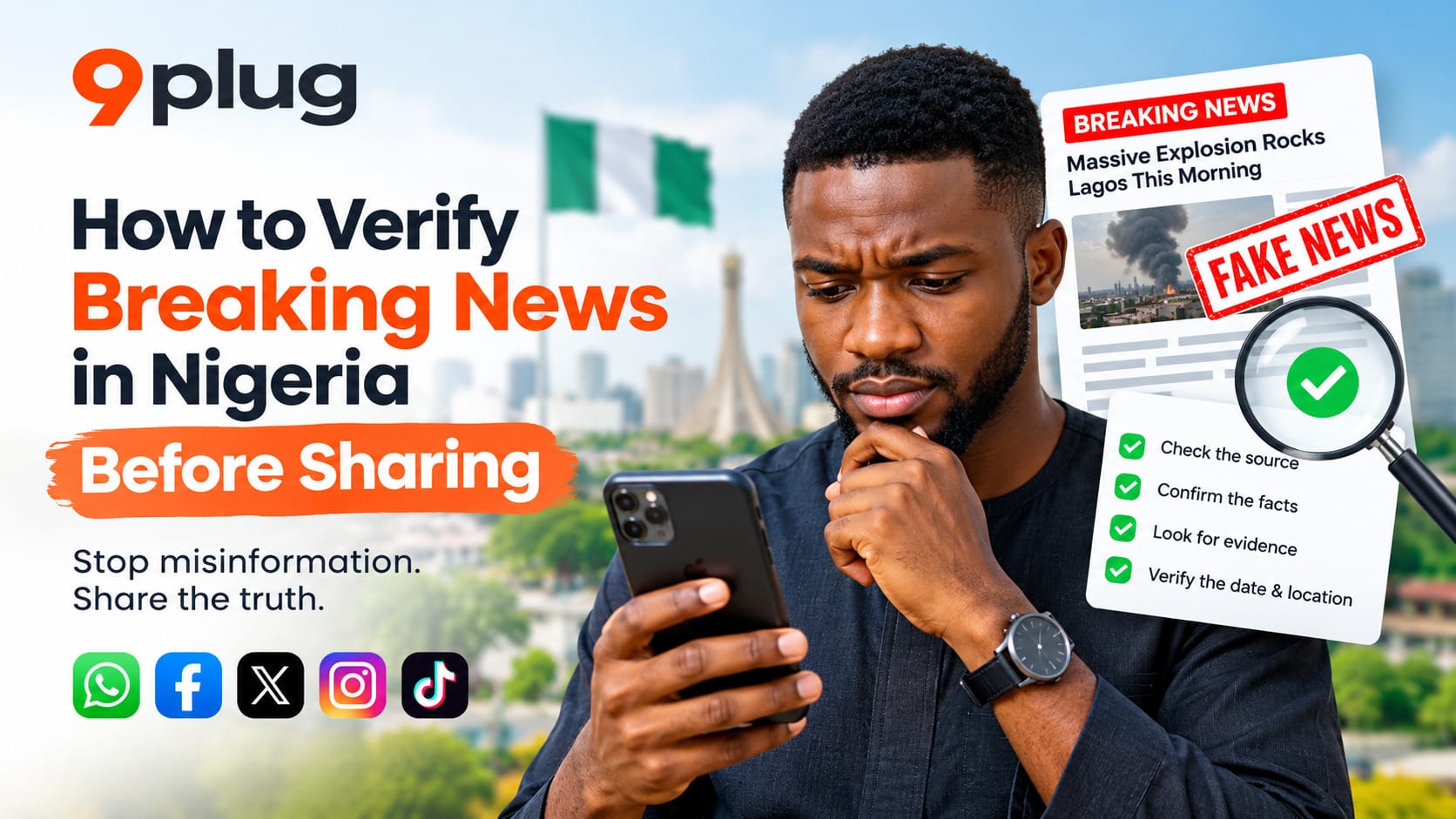
In today’s digital world, breaking news spreads across Nigeria within minutes. From political developments and security updates to celebrity controversies, economic announcements, and community incidents, social media has become a major source of information for millions of Nigerians.
Platforms such as WhatsApp, Facebook, Instagram, TikTok, and X allow people to share information quickly. However, not every trending story is accurate. Some reports contain misleading headlines, old photographs presented as new events, fabricated claims, or unconfirmed information designed to attract attention.
Sharing false news can create unnecessary panic, damage reputations, encourage public confusion, and put lives at risk, especially when the information concerns security threats, elections, public health, or emergencies.
Learning how to verify breaking news in Nigeria before sharing is therefore an essential digital skill. By taking a few simple steps to confirm a story’s accuracy, Nigerians can help reduce misinformation and promote responsible online communication.
1. Check the Original Source of the News
The first step in verifying breaking news is identifying where the information originated.
When you receive a news report through a WhatsApp group, social media post, or forwarded message, do not automatically assume it is genuine. Check whether the information comes from a recognised news organisation, an official government agency, or a credible eyewitness whose identity and account can be verified.
For example, if a message claims that the Federal Government has announced a new policy, check official government communication channels and established Nigerian news organisations for confirmation.
Ask yourself these questions:
- Who originally published the story?
- Is the source known for accurate reporting?
- Does the report identify where the information came from?
- Can the source provide evidence to support the claim?
Anonymous messages, screenshots without links, and forwarded posts that say “share before it is deleted” should be treated with caution.
2. Confirm the Story with Multiple Reliable News Sources
One of the easiest ways to check breaking news is to look for independent confirmation from other credible sources.
Search for the main claim using a search engine and compare reports from established Nigerian news organisations. Depending on the story, these may include the BBC News Pidgin, Channels Television, Premium Times, TheCable, or other reputable outlets with relevant reporting.
If the story concerns a government announcement, check the relevant ministry or agency. For election-related claims, consult the Independent National Electoral Commission (INEC). For police-related incidents, look for statements from the Nigeria Police Force or the appropriate state police command.
However, remember that several websites repeating the same unverified social media post do not necessarily constitute independent confirmation.
Look for reports that provide their own evidence, name relevant sources, or quote official statements.
3. Verify the Date, Time, and Location
Old news can easily be presented as a current event to mislead people.
A photograph of a past protest, an old flood incident, or a previous security operation may resurface online with a caption claiming it happened today in another Nigerian state.
Before sharing a report, check when the event actually occurred and where it took place.
Pay attention to:
- The original publication date.
- The date and time of the alleged incident.
- The location mentioned in the report.
- Whether the images or videos have appeared online before.
- Whether current reports support the claimed event.
For instance, a video showing flooding in Lagos may be shared with a caption claiming that a similar incident has just happened in Abuja. Without verification, viewers may mistake an old or unrelated clip for a current emergency.
Always establish the context before forwarding such material.
4. Use Fact-Checking Websites
Fact-checking organisations investigate viral claims, political statements, misleading photographs, and fabricated reports.
When a story appears suspicious, search for the claim on recognised fact-checking platforms before sharing it.
Useful resources include:
- Africa Check: Investigates claims circulating across African countries, including Nigeria.
- Dubawa: Focuses on fact-checking and information integrity in West Africa.
- AFP Fact Check: Investigates misleading claims, photographs, videos, and other viral content.
- Google Fact Check Explorer: Helps users discover fact-checking articles related to particular claims.
If a claim has already been investigated, the fact-check may explain what is true, what is false, and what remains uncertain.
If you cannot find an existing fact-check, that does not automatically mean the story is false. Continue checking original sources and independent evidence.
5. Check Photos and Videos Before Sharing
Images and videos can make false stories appear convincing. However, visual content can be taken out of context, edited, or generated using artificial intelligence.
For example, a video may show a genuine incident but be incorrectly described as a recent event in Nigeria. Another image may have been edited to make a person appear to have said or done something they never did.
You can use reverse image search tools such as Google Lens to investigate where an image has appeared online. Compare the results with the caption attached to the current post.
For videos, look for distinctive frames that can be searched as images. Examine visible landmarks, signs, weather conditions, uniforms, and other details that may help establish the location and date.
Also, be cautious of deepfake videos and AI-generated images. A realistic appearance is not proof that the content is authentic.
6. Read Beyond the Headline
Sensational headlines often attract attention, but they may not accurately represent the full story.
A headline might claim that a government has banned a particular activity, while the article explains that the proposal is still under consideration. Another headline may suggest that a public figure has been arrested when the report only describes an investigation.
Before sharing a story, read the full article rather than relying on a headline or screenshot.
Check whether the article provides supporting evidence, quotes relevant people, explains the background, and distinguishes confirmed facts from allegations.
If the headline makes a stronger claim than the article supports, avoid repeating the headline as an established fact.
7. Be Careful with WhatsApp Broadcasts and Forwarded Messages
WhatsApp is widely used in Nigeria for family communication, business updates, community announcements, and breaking news. Unfortunately, forwarded messages can spread misinformation rapidly.
A message does not become trustworthy simply because it comes from a friend, relative, colleague, or respected community member.
When you receive a suspicious message:
- Identify the specific claim being made.
- Search for the original source.
- Check official announcements and credible reporting.
- Look for independent confirmation.
- Share it only when the evidence supports the claim.
If the information cannot be verified, do not forward it as fact. You can politely tell the sender that the report remains unconfirmed and encourage them to check reliable sources.
This approach helps protect relationships while promoting responsible information sharing.
8. Verify Official Announcements Through Appropriate Channels
Some breaking news requires confirmation from a specific institution rather than a general search.
For example:
- Elections: Check official INEC announcements and verified election updates.
- Security incidents: Consult relevant police commands, emergency agencies, and credible local reporting.
- Government policies: Check the responsible ministry, government department, or official spokesperson.
- Weather emergencies: Consult the Nigerian Meteorological Agency (NiMet) and relevant emergency management authorities.
- Public health: Look for guidance from the Nigeria Centre for Disease Control and Prevention (NCDC) or the relevant health authority.
Be careful with fake social media accounts that imitate public officials or government agencies. Look for links from official websites and corroborating announcements.
Also, understand that an official statement can confirm what an agency has announced without necessarily resolving every disputed detail. For important or contested claims, compare the statement with independent evidence.
9. Recognise Common Signs of Fake News
Although misinformation can look professional, certain warning signs should make you investigate further.
Watch out for:
- Headlines designed to provoke extreme anger or fear.
- Claims that demand immediate sharing.
- Missing author names, dates, or original sources.
- Poorly cropped screenshots with no verifiable link.
- Images that do not match the reported location or event.
- Unsupported claims attributed to unnamed insiders.
- Fake quotations attributed to public figures.
- Websites impersonating recognised news organisations.
- Reports that contradict strong evidence from reliable sources.
These warning signs do not automatically prove that a story is false. They indicate that additional verification is necessary before sharing it.
10. Understand the Risks of Sharing Unverified News
Sharing false information can have consequences beyond social media arguments.
In Nigeria, an unverified security alert may cause residents to panic or avoid safe locations. A false allegation may damage someone’s reputation. Misleading election information may confuse voters, while fabricated financial announcements can influence business decisions.
Depending on the circumstances, publishing or circulating certain false claims may also create legal risks.
Responsible sharing means considering not only whether a story is interesting but also whether it is accurate, relevant, and safe to distribute.
If you have already shared a report that turns out to be false, correct the mistake promptly. Delete the original post where appropriate, publish a correction, and provide reliable information that helps others understand the facts.
11. Follow a Simple Fact-Checking Routine Before Sharing
You do not need to be a professional journalist to verify information. A short routine can help you make better decisions whenever breaking news appears on your phone.
Use this five-step checklist:
Step 1: Stop. Avoid forwarding the message immediately, especially if it creates fear or outrage.
Step 2: Find the source. Identify who originally reported the event and whether the source is credible.
Step 3: Check the evidence. Look for original documents, official statements, authentic images, or direct reporting.
Step 4: Cross-check. Compare the claim with independent, reliable sources and relevant fact-checking organisations.
Step 5: Decide. Share the information with appropriate context if it is supported by evidence. If it remains unverified, wait for confirmation.
This routine can take only a few minutes and may prevent a misleading story from reaching hundreds of other people.
Conclusion
Verifying breaking news in Nigeria before sharing is an important responsibility for every social media user. Although digital platforms make it easier to access information, they also make it possible for rumours, manipulated images, and false claims to spread rapidly.
By checking original sources, comparing independent reports, confirming dates and locations, using fact-checking websites, and examining photographs and videos carefully, Nigerians can make more informed decisions about what they share.
The most important rule is simple: do not confuse a trending story with a verified fact.
Before forwarding breaking news to a WhatsApp group, posting it on Facebook, or sharing it on X, take a moment to confirm its accuracy. Responsible sharing helps protect communities, reduce unnecessary panic, and build a more informed Nigerian society.
Think before you share. Verify before you believe. Help stop misinformation.
Dangote’s $16 billion Kenya refinery project gets court clearance to proceed

COMMENTS